

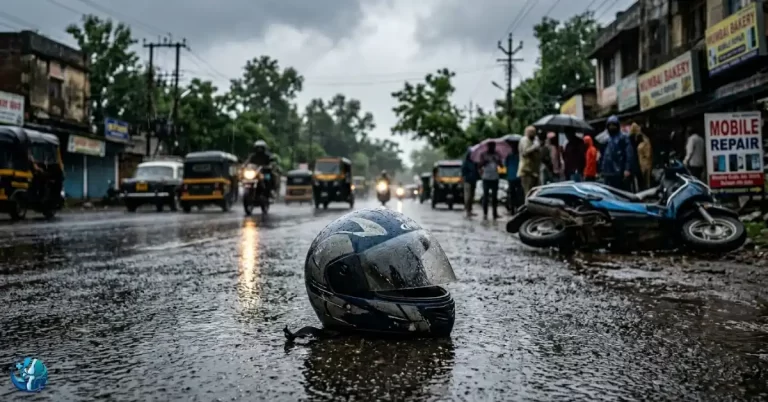
June is just days away, and the arrival of the monsoon brings a much-needed relief from the intense 44-degree summer heat. However, for two-wheeler riders in Ahilyanagar, the first few showers represent the most dangerous driving conditions of the year.
During the long summer months, local roads accumulate a thick layer of engine oil, rubber residue, and fine dust. When the first light rains hit the asphalt, they do not wash this mixture away. Instead, the water sits on top of the oil, creating an invisible, highly slick film. This environmental hazard turns busy routes like Savedi Road or the Ahmednagar-Pune highway into absolute ice rinks for motorcycles and scooters.
A sudden brake or a sharp turn on this surface inevitably leads to a violent motorcycle skid. In the chaotic seconds following a road accident, adrenaline masks the pain, leaving many riders unaware of severe skeletal damage. Understanding how these sudden impacts affect your bones, and knowing the right immediate steps to take, can mean the difference between a full recovery and permanent joint stiffness.
Why the First Rains Cause a Spike in Orthopedic Traumas
The dramatic rise in road traffic injuries during early June comes down to a mix of physics and human instinct. When a road has been dry for months, grease and oil pool deep within the pores of the asphalt. A heavy downpour eventually washes these oils away, but the initial light showers do exactly the opposite. The water causes the oil to float to the surface, creating an invisible layer of lubricant. For anyone riding a two-wheeler, hitting this mixture at normal speed completely eliminates tire traction, triggering an instant skid.
When a motorcycle or scooter loses traction, the rider has less than a second to react. This is where auto accident orthopedics becomes a critical study of human physics.
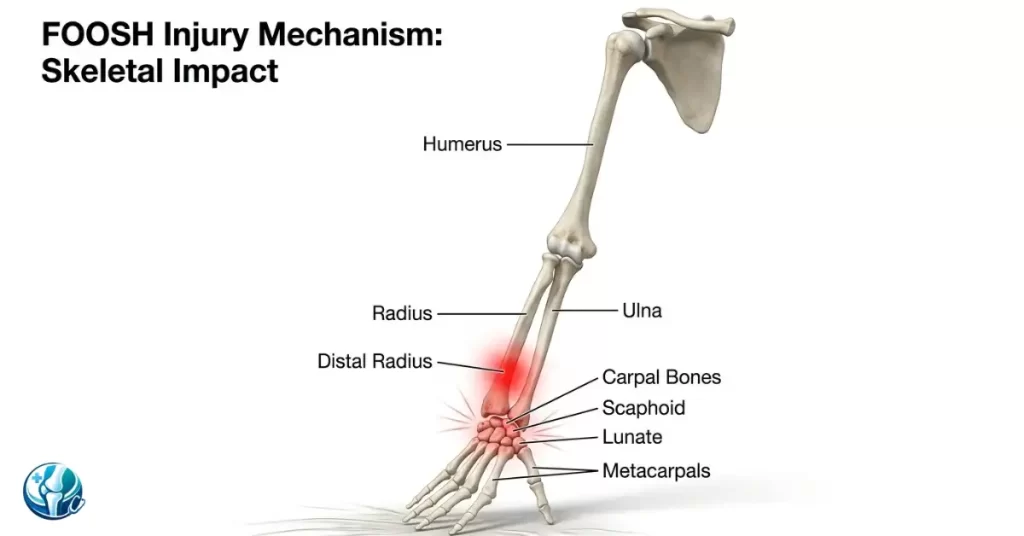
The immediate human instinct during a sudden fall is to protect the head and face. To do this, a rider will automatically throw out their arm to break the impact. In medical terms, this is known as a FOOSH injury: a Fall On an Outstretched Hand.
While this reflex successfully protects the head, it forces the entire kinetic energy of the crash, combined with the weight of the moving vehicle, directly up through the hand and wrist. Because the bones of the upper extremity are not designed to absorb such massive, concentrated force, the energy travels upward until something snaps. This mechanical chain reaction is the primary reason why specialized accident units see an immediate, predictable wave of identical upper-body skeletal injuries as soon as the weather turns.
The Top 3 Monsoon Skid Injuries
When a two-wheeler slides out on a slippery Ahilyanagar road, the kinetic energy of the crash targets specific vulnerable points on the human body. Based on our clinical trauma experience, here are the three most common skeletal injuries we see during the first monsoon showers.
1. The Clavicle (Collarbone) Fracture
When a rider is thrown from their vehicle, the shoulder often takes the blunt force of the asphalt. This direct, violent impact easily snaps the collarbone.
- The Symptoms: Patients experience immediate, sharp pain and lose the ability to lift their arm across their chest. You will often notice a visible bump or sagging deformity under the skin.
- The Diagnostic Pivot: Sometimes, the collarbone survives the crash, but the joint itself pops out of the socket. We have detailed the dangers of this exact impact in our guide on Why Ahilyanagar Athletes Should Never Ignore a Dislocated Shoulder. Both injuries require immediate clinical imaging.
2. Wrist Sprains vs. Wrist Fractures
Breaking a fall with an outstretched hand forces your wrist to bend backward violently. Patients frequently rush into our emergency room asking for broken wrist treatment. However, you must first differentiate between a simple ligament sprain and a true fracture of the scaphoid or distal radius bones.
- The Difference: A sprain involves stretched or torn ligaments. A fracture means the bone has cracked or shattered.
- The Protocol: You cannot diagnose this by sight. High-resolution X-rays are the only definitive way to determine the correct treatment for broken wrist bones and prevent long-term grip weakness.
3. Leg and Ankle Crush Injuries
Motorcycles are incredibly heavy. When a bike slides out, it frequently traps the rider’s leg underneath the hot exhaust pipe or engine guard.
- The Damage: This trapping mechanism causes severe crush injuries and twisting fractures to the tibia, fibula, or ankle joint.
- When to Act: The immediate swelling can be massive. If you cannot bear any physical weight on the foot without excruciating pain, you need emergency skeletal intervention. This is the exact moment you should be looking for a specialized leg fracture doctor near you in ahilyanagar rather than visiting a general family physician.
Immediate Steps: What to Do Right After a Skid
The moments immediately following a road accident are chaotic. Your body instantly floods with adrenaline. This natural chemical response temporarily blocks severe pain, making many riders believe they only suffered a minor bruise. However, trying to move or walk on a fractured bone can sever surrounding nerves and blood vessels.
If you or someone else is injured in a monsoon skid, follow this exact clinical protocol before leaving the scene:
- Stop Bystander Interference: Well-meaning bystanders often try to pull, massage, or forcefully straighten a visibly bent limb. You must stop them immediately. Pulling a displaced bone is incredibly dangerous and can cause permanent nerve damage.
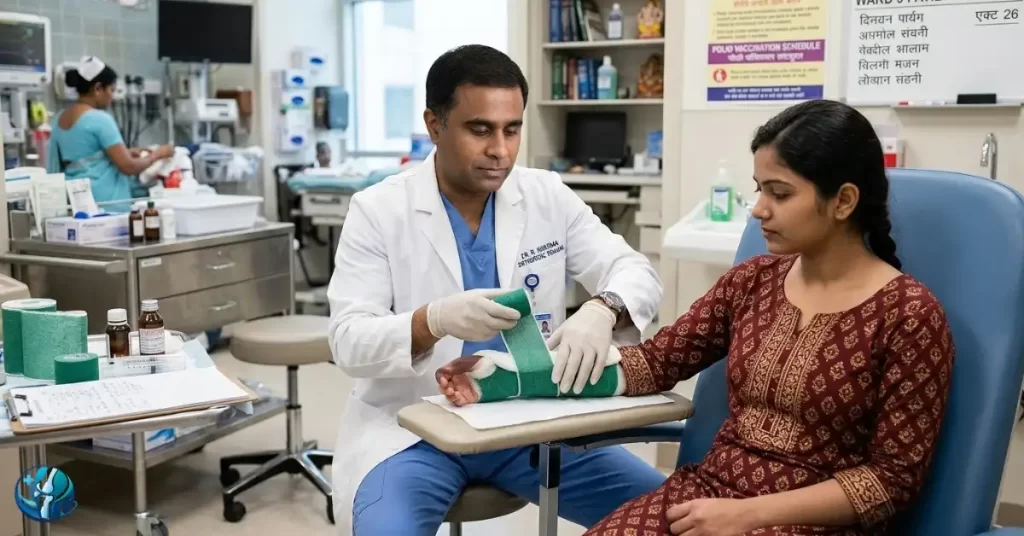
- Immobilize the Joint: The absolute best primary treatment for broken wrist or arm injuries at the crash site is strict immobilization. Do not try to test your range of motion. Keep the limb completely still.
- Create a Makeshift Splint: If you cannot get an ambulance, you must create a temporary splint before getting into a car or rickshaw. You can wrap a thick magazine, a piece of stiff cardboard, or a rolled-up newspaper tightly around the wrist or leg using a piece of cloth. This prevents the sharp bone fragments from shifting and tearing tissue during transport.
- Do Not “Wait It Out”: The adrenaline will wear off within an hour, and the true pain will hit. Ignoring a suspected fracture and hoping it heals on its own is the fastest way to guarantee a “malunion.” This is a severe complication where the fractured bone heals in a crooked, incorrect position. Fixing a malunion requires complex, invasive surgery to re-break and reset the bone later.
The first hour after a crash is the most critical window for your joint health. Securing immediate clinical imaging should be your only priority.
Finding the Best Fracture Doctor Near You in Ahilyanagar
When a monsoon accident happens, the immediate reaction for most families is to rush the patient to the nearest general hospital emergency room. While a general physician can stabilize your vitals and apply a temporary plaster slab, they are not specialists in long-term joint mobility.
For a complex wrist break or a shattered collarbone, simply putting a cast on it is rarely enough. You need to consult a dedicated bone fracture doctor near you in Ahilyanagar to ensure the skeletal structure is set with absolute precision. If a bone heals even slightly out of alignment, you will suffer from chronic pain and permanently restricted movement.
Dr. Avinash Gadekar is a leading orthopedic surgeon providing advanced trauma and fracture care at Neuron Plus Hospital in Savedi. We understand the severe urgency of monsoon road traumas. Our facility is a fully equipped accident and orthopedic hospital, designed specifically to handle complex crush injuries, displaced bones, and emergency skeletal surgeries that general clinics cannot manage.
If you or a loved one has suffered a severe skid on the wet roads this June, do not settle for a temporary fix. Getting immediate, specialized surgical care is the only way to guarantee a full return to normal life.
If you are looking for the most experienced fracture doctor near you in Ahilyanagar, contact Neuron Plus Hospital immediately at 09420031389 or bring the patient directly to our Savedi facility for emergency X-rays and stabilization.
Frequently Asked Questions: Monsoon Road Accidents & Fractures
Q1. Why do two-wheeler accidents increase during the first monsoon rain?
Ans: During the dry summer, engine oil and dust settle deep into the asphalt. The first monsoon rains bring this oil to the surface. This creates a highly dangerous, invisible slick layer. Two-wheelers lose tire traction immediately, leading to sudden and violent skids.
Q2. How do I know if my wrist is sprained or broken after a fall?
Ans: You cannot accurately diagnose a fracture just by looking at it. Both sprains and fractures cause severe pain and massive swelling. If you cannot bend your wrist or grip an object without excruciating pain, you must visit an orthopedic hospital for an immediate X-ray.
Q3. What is the primary treatment for a broken wrist at the accident site?
Ans: The most critical step is strict immobilization. Do not let anyone pull or twist the joint. Wrap a thick magazine or stiff cardboard around the arm with a cloth to create a temporary splint. This prevents bone fragments from severing nerves during transport.
Q4. Can I walk on my leg after a motorcycle crush injury?
Ans: Absolutely not. Adrenaline masks severe pain right after a crash. Attempting to bear weight on a fractured tibia or ankle can force broken bones through the skin or tear major blood vessels. Keep the leg perfectly still and call an ambulance immediately.
Q5. Which doctor is best to consult for a bone fracture near me in Ahilyanagar?
Ans: You should consult a dedicated orthopedic trauma surgeon rather than a general physician. A specialist ensures your bones are aligned perfectly using advanced imaging and surgical techniques. Dr. Avinash Gadekar at Neuron Plus Hospital provides expert, immediate fracture care in Ahilyanagar.