

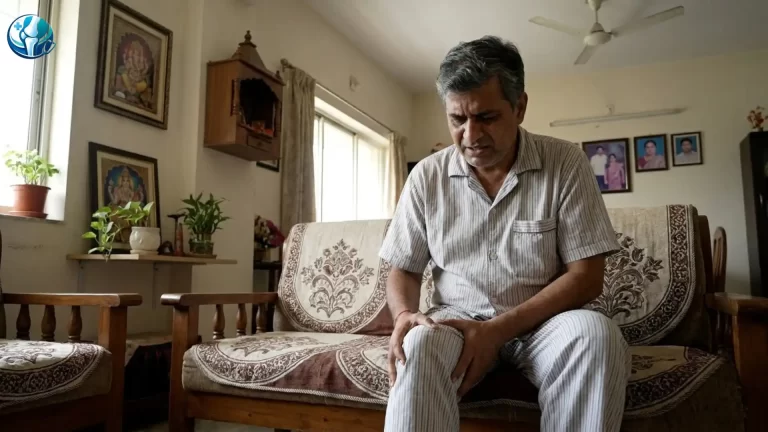
Knee pain (गुडघेदुखी) is one of the most common complaints people deal with, whether it comes from age, an old injury, or simply the wear and tear of daily life. Because it’s so common, it’s also easy to dismiss. Many people reach for painkillers, apply ice, or simply “push through it,” hoping the discomfort will fade on its own.
But not all knee pain is the same. Some symptoms are your body’s way of signaling that something more serious is going on beneath the surface and ignoring them can allow a manageable problem to turn into a much bigger one. Knowing the warning signs can help you seek treatment before the condition worsens, rather than after.
An orthopedic doctor (हाडांचे व सांध्यांचे तज्ज्ञ डॉक्टर) can properly diagnose the underlying cause of your knee pain and recommend a treatment plan suited to your specific condition. Here are ten signs that it’s time to stop waiting and book that appointment.
1. Your Knee Pain Lasts Longer Than Two Weeks
A little soreness after an intense workout or a long day on your feet is normal, and it usually fades within a few days. But pain that lingers beyond two weeks, despite rest and home care, is a different story. Temporary pain resolves on its own; persistent pain typically doesn’t. When discomfort refuses to go away, it’s a sign your knee needs a proper medical evaluation rather than more waiting.
2. Your Knee Is Swollen (गुडघ्याला सूज येणे)
Swelling that doesn’t go down after a day or two, especially if it’s accompanied by warmth around the joint (सांधा), often points to inflammation, fluid buildup, or an internal injury. Persistent swelling is one of the clearest signs that something inside the knee needs attention, and it shouldn’t be brushed off as “just a bit of puffiness.”
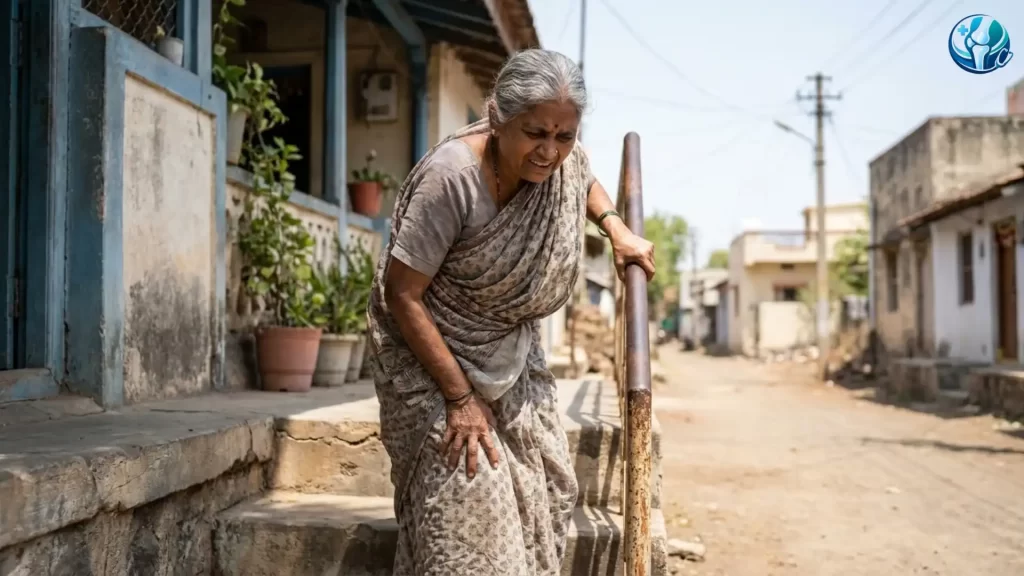
3. Walking or Climbing Stairs Has Become Difficult (चालताना किंवा पायऱ्या चढताना त्रास)
If everyday movements like walking to the kitchen or climbing a flight of stairs now cause pain or hesitation, your knee is telling you something. This kind of reduced mobility doesn’t just affect your knee; it starts to affect your entire quality of life, limiting the things you used to do without a second thought.
4. Your Knee Feels Unstable or Gives Way (गुडघा साथ न देणे)
A knee that buckles or feels like it might give out while you’re walking is a red flag. This instability often comes with a loss of confidence in your own movement, and it significantly increases your risk of falling. This is not something to manage with rest alone, it needs professional evaluation.
5. Your Knee Locks, Clicks, or Gets Stuck (गुडघा अडकणे)
Occasional, painless clicking can be harmless. But if your knee locks up, catches, or makes noticeable clicking sounds accompanied by pain, it could point to a problem with the cartilage (उपास्थी) or a torn meniscus causing a locking sensation. These are mechanical issues that typically don’t resolve without treatment.
6. You Cannot Fully Bend or Straighten Your Knee (गुडघा पूर्णपणे वाकवता किंवा सरळ करता न येणे)
Stiffness (आखडणे) that limits your range of motion, where you simply can’t bend or straighten your knee all the way, may indicate a mechanical blockage inside the joint. This is more than just tightness from inactivity; it’s often a structural issue that needs to be examined.
7. Knee Pain Is Worse at Night or While Resting
Pain that flares up at night or shows up even when you’re not moving is worth paying close attention to. Unlike activity-related soreness, pain during rest often points to an underlying joint condition that needs a doctor’s assessment rather than a change in activity level.
8. Your Knee Pain Keeps Coming Back
A single episode of knee pain that resolves and never returns is one thing. Recurring pain the kind that keeps showing up every few weeks or months is another. Ignoring repeated symptoms allows what could be a manageable issue to develop into a chronic knee problem over time.
9. Home Remedies Are No Longer Working
Rest, ice therapy, a knee brace, and over the counter pain medication are all reasonable first steps. But when these methods stop providing relief, it’s a clear signal that the underlying issue is beyond what home care can fix. That’s when non-surgical knee preservation care or other professional treatment becomes necessary.
10. Your Knee Pain Is Getting Worse Instead of Better
Pain that should be improving with time and care but instead keeps increasing, along with reduced function is one of the most important warning signs. If you notice that tablets and injections have stopped working the way they used to, delaying treatment in these cases may lead to further joint damage, making eventual treatment more complex than it needed to be.
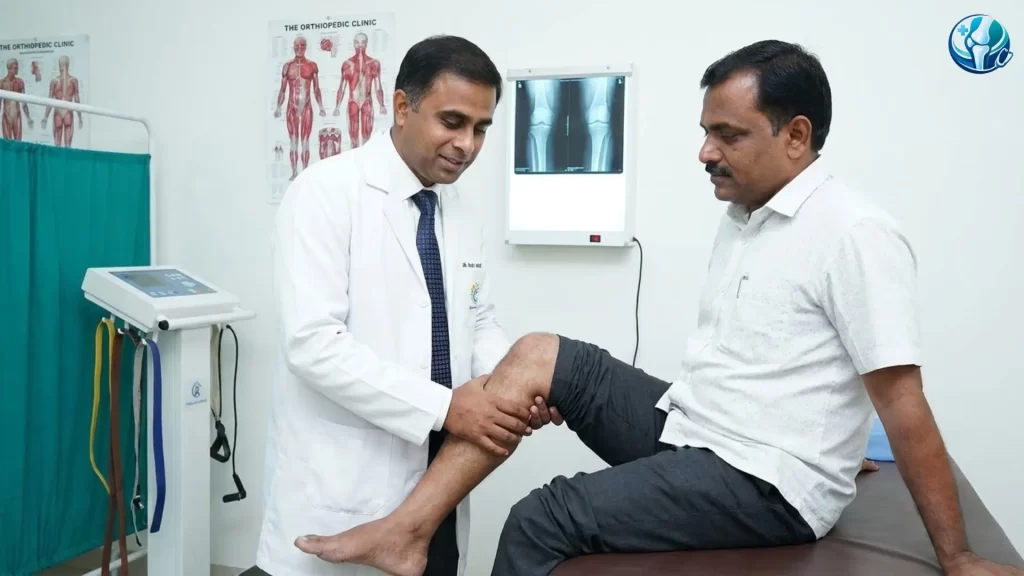
What Happens During Your Visit to an Orthopedic Doctor?
If you recognize one or more of these signs, here’s what a visit to an orthopedic doctor (हाडांचे व सांध्यांचे तज्ज्ञ डॉक्टर) typically involves:
- Medical history – understanding your symptoms, past injuries, and lifestyle
- Physical examination – checking range of motion, stability, and pain points
- Movement assessment – observing how you walk, bend, and bear weight
- Digital X-ray – to check for bone-related issues
- MRI if required – for a closer look at soft tissue, cartilage, or ligaments
- A personalized treatment plan – based on your specific diagnosis
Treatment Options for Knee Pain (गुडघेदुखी)
Non-Surgical Treatment
- Medication
- Physiotherapy (फिजिओथेरपी)
- Lifestyle modifications
- Knee braces
- Joint injections (if applicable)
Surgical Treatment
- Arthroscopy (keyhole procedure)
- Ligament reconstruction
- Knee replacement (गुडघा प्रत्यारोपण), when necessary
Most cases don’t require surgery. An orthopedic doctor will typically start with conservative, non-surgical approaches and only recommend surgery when it’s genuinely the best option for long-term relief and function.
Tips to Keep Your Knees Healthy
- Maintain a healthy weight
- Exercise regularly
- Strengthen the muscles around your legs
- Wear supportive footwear
- Avoid prolonged strain on the knees
- Seek early treatment for persistent symptoms
Small, consistent habits go a long way in protecting your knees from long-term damage.
When Should You Visit an Orthopedic Doctor in Ahilyanagar?
If any of the following apply to you, it’s time to schedule an evaluation:
- Pain persists beyond two weeks
- Swelling increases or doesn’t go down
- Walking becomes difficult
- The knee feels unstable or gives way
- Home remedies fail to provide relief
Catching these issues early gives you far more treatment options – and far better outcomes – than waiting until the pain becomes unbearable.
Why Choose Dr. Avinash Gadekar?
When it comes to knee pain, the right diagnosis and the right treatment plan make all the difference. Dr. Avinash Gadekar brings years of hands-on orthopedic experience to every consultation, combining modern diagnostic tools with a personalized approach so patients in Ahilyanagar get care that’s tailored to their specific condition, not a one-size-fits-all solution.
- Experienced orthopedic care
- Personalized treatment plans
- Modern diagnostic facilities
- Comprehensive care for knee conditions
- Convenient clinic location in Savedi, Ahilyanagar
The Bottom Line
Don’t ignore persistent knee pain. Early diagnosis often prevents complications and improves recovery and the sooner you address the warning signs, the simpler your treatment is likely to be. If you’re experiencing any of the symptoms above, consult an orthopedic doctor in Ahilyanagar and take the first step toward getting back to pain-free movement.
Don't Let Knee Pain Hold You Back
If you’re experiencing any of the warning signs above, waiting longer only makes treatment harder. Schedule a consultation with Dr. Avinash Gadekar at his clinic in Savedi, Ahilyanagar, and get a clear diagnosis and treatment plan today.
FAQs
Q1. How long should knee pain last before seeing an orthopedic doctor?
Ans. If pain persists beyond two weeks despite rest and home care, it’s time to see a doctor.
Q2. Can knee pain go away without treatment?
Ans. Mild, activity-related soreness often resolves on its own. Persistent, recurring, or worsening pain usually needs professional evaluation.
Q3. Is knee swelling (सूज) always a sign of a serious problem?
Ans. Not always, but swelling that persists or is accompanied by warmth should be checked by a doctor to rule out inflammation or injury.
Q4. What tests does an orthopedic doctor perform for knee pain?
Ans. A physical examination, movement assessment, and imaging such as a digital X-ray or MRI, depending on the suspected cause.
Q5. Can knee pain be treated without surgery?
Ans. Yes. Most knee pain is managed with non-surgical treatments like medication, physiotherapy, lifestyle changes, and braces. Surgery is only recommended when necessary.
Q6. When should I consult an orthopedic doctor in Ahilyanagar for knee pain?
Ans. If your pain is persistent, worsening, accompanied by swelling or instability, or no longer responding to home remedies.