

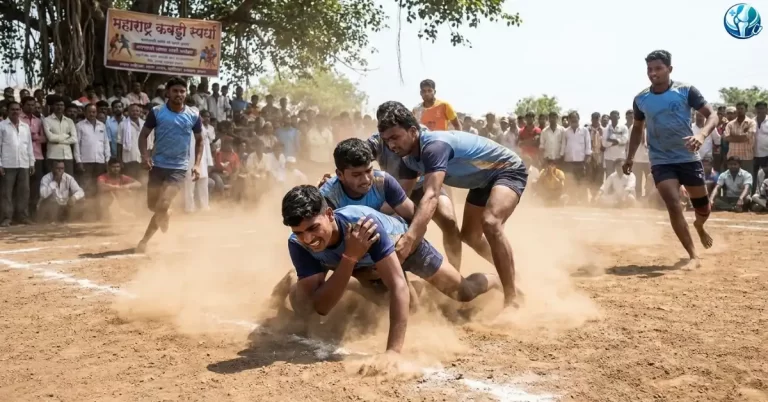
Ahilyanagar possesses a fierce local sports culture. From weekend cricket leagues at Wadia Park to intense kabaddi matches across the district, athletes push their bodies to the absolute limit. High-impact collisions and diving falls are just part of the game.
However, ignoring a serious joint injury is the fastest way to end an athletic career. If you recently suffered a lower-body impact, you already know the importance of consulting a dedicated sports injury doctor in Ahilyanagar rather than waiting for the swelling to fade. The exact same urgency applies to your upper body.
A dislocated shoulder is not just a minor sprain. It occurs when the upper arm bone (humerus) is violently forced out of the shoulder socket. The most obvious dislocated shoulder symptoms include immediate, intense pain, a visibly “square” or deformed shoulder profile, and a complete inability to move the arm.
Let us break down exactly what happens inside your shoulder when it pops out and how to fix it permanently.
Anterior vs. Posterior Shoulder Dislocation: What is the Difference?
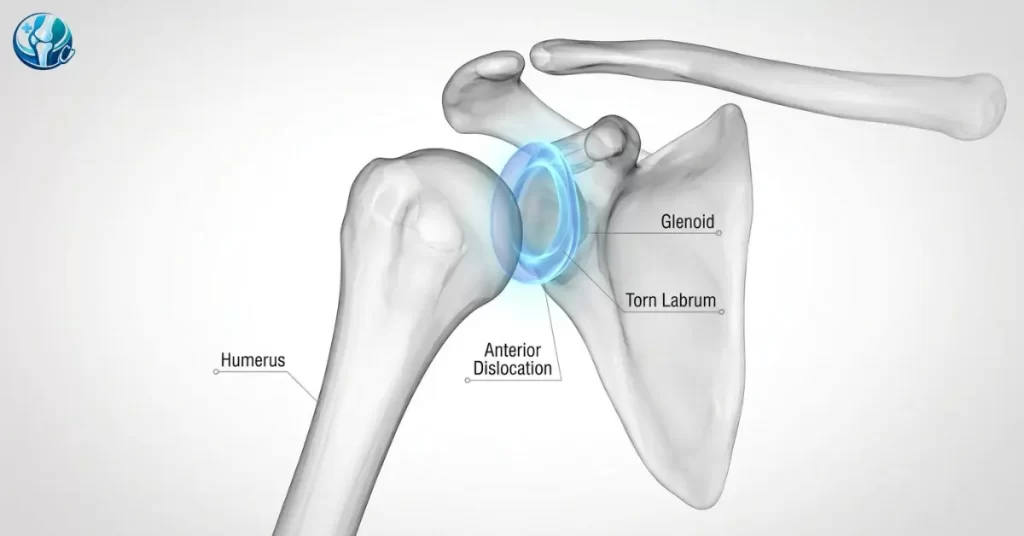
The shoulder is the most mobile joint in the human body. This incredible range of motion comes at a severe cost: stability. The shoulder socket is extremely shallow. It only covers about 30% of the arm bone ball. Because of this anatomical design, a shoulder joint dislocation can happen in two distinct ways.
Anterior Shoulder Dislocation
This is the most common type. It accounts for up to 95% of all clinical cases. An anterior dislocation happens when the arm bone is forced forward and down. Athletes usually suffer this injury when their arm is raised and forcefully pushed backward. A bowler stopping a fast-moving cricket ball or a kabaddi raider getting tackled with an outstretched arm are classic scenarios.
Posterior Shoulder Dislocation
This variation is much rarer and notoriously difficult to spot. A posterior dislocation occurs when the arm bone is pushed backward out of the socket. This usually happens due to a direct, massive blow to the front of the shoulder. Severe trauma from road accidents or violent electric shocks can also trigger this specific dislocation.
Immediate First Aid: How to Fix a Dislocated Shoulder Safely
People frequently search Google for how to fix a dislocated shoulder. The internet is full of terrible advice. Never allow a teammate or a local trainer to yank your arm back into the socket on the field.
Attempting a DIY joint reset can pinch major blood vessels, tear surrounding ligaments, and cause permanent nerve damage. This is why any acute joint injury requires immediate evaluation at a dedicated trauma and fracture care center before anyone attempts a physical manipulation.
The Critical Role of the X-Ray
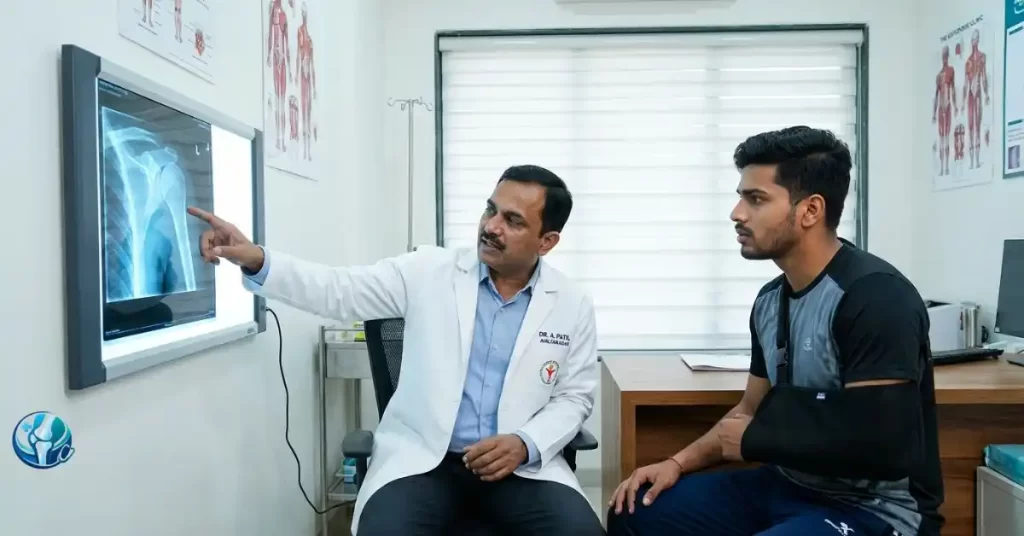
Before a doctor performs a shoulder dislocation reduction (the medical term for putting the joint back in place), they must see exactly what is happening inside. A shoulder dislocation x ray is absolutely mandatory.
The doctor needs to confirm the exact direction of the dislocation and check for hidden bone fractures. If a chipped bone is wedged in the joint space, forcing the shoulder back into place will destroy the surrounding cartilage. Once the X-ray is clear, an orthopedic specialist will administer a local anesthetic or mild sedative and safely guide the ball back into the socket.
The Recurrence Trap: Why It Keeps Slipping Out
Many young athletes make a massive mistake. They rest for a week, feel fine, and jump right back onto the pitch. Then, the shoulder pops out again.
When your shoulder dislocates the first time, it brutally stretches the joint capsule and often tears the labrum. The labrum is a thick ring of cartilage that acts as a suction cup to keep the joint locked together. When this tears, you develop a “Bankart lesion.” Your shoulder loses its natural bumper.
Worse still, every subsequent dislocation chips away at the bone of the socket itself. This is known as glenoid bone loss. If you lose too much bone mass, the shoulder will become chronically unstable. It will start slipping out while you are just sleeping or putting on a t-shirt.
Shoulder Dislocation Treatment: When Do You Need Surgery?
The ultimate goal is to regain full athletic strength. The treatment path depends heavily on your age, activity level, and the severity of the initial tear.
Conservative Care and Rehabilitation
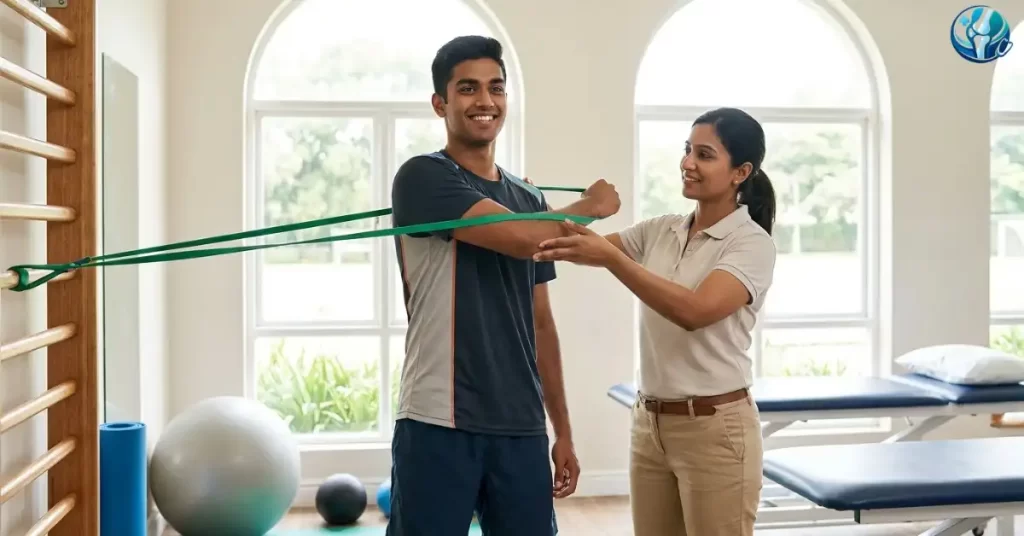
For a first-time dislocation with no severe tissue tearing, conservative care is highly effective. You will spend the first three to four weeks in a sling to immobilize the joint. Following this rest period, targeted shoulder dislocation exercise protocols are introduced. Physiotherapy focuses heavily on strengthening the rotator cuff muscles. Stronger muscles compensate for the stretched ligaments and pull the joint tight.
Arthroscopic Bankart Repair (Keyhole Surgery)
If the joint remains chronically unstable, advanced arthroscopy and sports injury treatments become necessary to permanently repair the torn cartilage.
Dr. Avinash Gadekar utilizes minimally invasive keyhole surgery. Instead of a massive open incision, he inserts a tiny high-definition camera into the joint. Using specialized instruments, he places bio-composite anchors into the bone and stitches the torn labrum firmly back into place. This modern technique minimizes tissue damage, dramatically reduces post-operative pain, and speeds up the entire healing process.
The Recovery Timeline: Returning to the Pitch
Athletes always ask: what is the fastest way to heal a dislocated shoulder? The answer is strict adherence to clinical rehabilitation. Rushing the process guarantees a reinjury.
If you are wondering how long after shoulder dislocation can I lift heavy weights or return to contact sports, here is the standard timeline:
- Weeks 1 to 3: Strict immobilization in a sling. No active lifting.
- Weeks 4 to 6: The sling is removed. You begin gentle, passive range of motion exercises under a physiotherapist’s guidance.
- Weeks 7 to 12: Active strengthening begins. You will use resistance bands to rebuild the rotator cuff and scapular muscles.
- Months 4 to 6: Sport-specific training begins. Overhead athletes and contact sport players must pass strict strength benchmarks before getting medical clearance for competitive play.
Expert Sports Injury Care at Neuron Plus Hospital
Do not let a treatable joint injury force you into early retirement. Dr. Avinash Gadekar is a leading orthopedic surgeon in Ahilyanagar specializing in advanced sports arthroscopy. Our team at Neuron Plus Hospital is dedicated to getting local athletes back on the field with permanent, stable results.
We also believe world-class sports medicine should be accessible. If you require surgery, our administrative team will help you navigate your insurance options. You can read our complete guide on utilizing the CM Relief Fund for joint surgeries to understand your coverage eligibility.
Do not wait for the next painful dislocation. Book your consultation with our expert team today and secure the future of your athletic career.
Frequently Asked Questions:
Q1. How do you safely fix a dislocated shoulder?
Ans: Never attempt to force a dislocated shoulder back into place yourself. This causes severe nerve damage. You must visit a trauma center immediately for a shoulder X-ray. An orthopedic doctor will then safely perform a closed reduction to realign the joint under local anesthesia.
Q2. What is the fastest way to heal a dislocated shoulder?
Ans: The fastest recovery requires strict immobilization in a sling for the first three weeks. Rushing back to sports guarantees a reinjury. After the sling is removed, you must perform targeted shoulder dislocation exercises with a physiotherapist to rebuild your rotator cuff strength.
Q3. How long after a shoulder dislocation can I lift weights?
Ans: You must avoid heavy lifting for at least three to four months. You will begin light resistance band training around week seven. You must pass strict clinical strength benchmarks before your doctor clears you to return to heavy overhead lifting or contact sports.
Q4. What happens if a dislocated shoulder keeps popping out?
Ans: Recurrent shoulder dislocations indicate a torn labrum or severe glenoid bone loss. Your joint has lost its natural cartilage bumper. In these chronic cases, conservative rest is no longer effective. You will need minimally invasive arthroscopic keyhole surgery to permanently stabilize the joint.
Q5. What is the difference between an anterior and posterior dislocation?
Ans: An anterior dislocation accounts for 95 percent of cases and happens when the arm is violently forced forward and down. A posterior dislocation is much rarer. It forces the arm bone backward and is usually caused by direct, heavy trauma to the front of the shoulder.